
Let’s be honest for a second. There is nothing more soul-crushing than spending three hours tweaking your resume, hitting ‘Apply’ on LinkedIn, and then… absolute silence. You wait for days, hoping for an email that isn’t automated. But nothing comes. It feels like your application just fell into a deep, dark black hole somewhere over Gurgaon or Bengaluru.
If you are currently stuck in this loop, I want you to take a deep breath. It’s not you. Your talent, your hard work, and your degree are not the problem here. The issue is that most people write resumes for humans, but they are actually being screened by machines first. Let’s sit down, grab a coffee, and pull back the curtain on how hiring actually works today so you can master How to Write a Resume That Gets More Interviews .
The Hidden Trap of the 6-Second Scan (And Why Your Current CV Fails)
Here’s the thing that most job seekers don’t realize: hiring managers do not curl up with your resume and a warm cup of tea to read it like a novel. They scan it. In fact, eye-tracking studies show they spend an average of six to seven seconds on their initial screen. If your layout is chaotic, they just move on.
But before a human even lays eyes on your application, it has to survive the gatekeeper. Most mid-to-large companies now use an applicant tracking system (ATS) . This is software that parses, filters, and ranks resumes based on relevancy. If your resume isn’t formatted to play nice with these bots, it gets filtered out before a real person even knows you exist.
Think of your job hunt like a high-performance lifestyle adjustment. Just like how starting an intermittent fasting routine trims down unnecessary calorie bloat to help your body run at its absolute peak, you need to aggressively cut the fluff from your career history. If it doesn’t directly prove you can do the job, it’s just noise.
Cracking the Code | Step-by-Step to an ATS-Friendly Resume
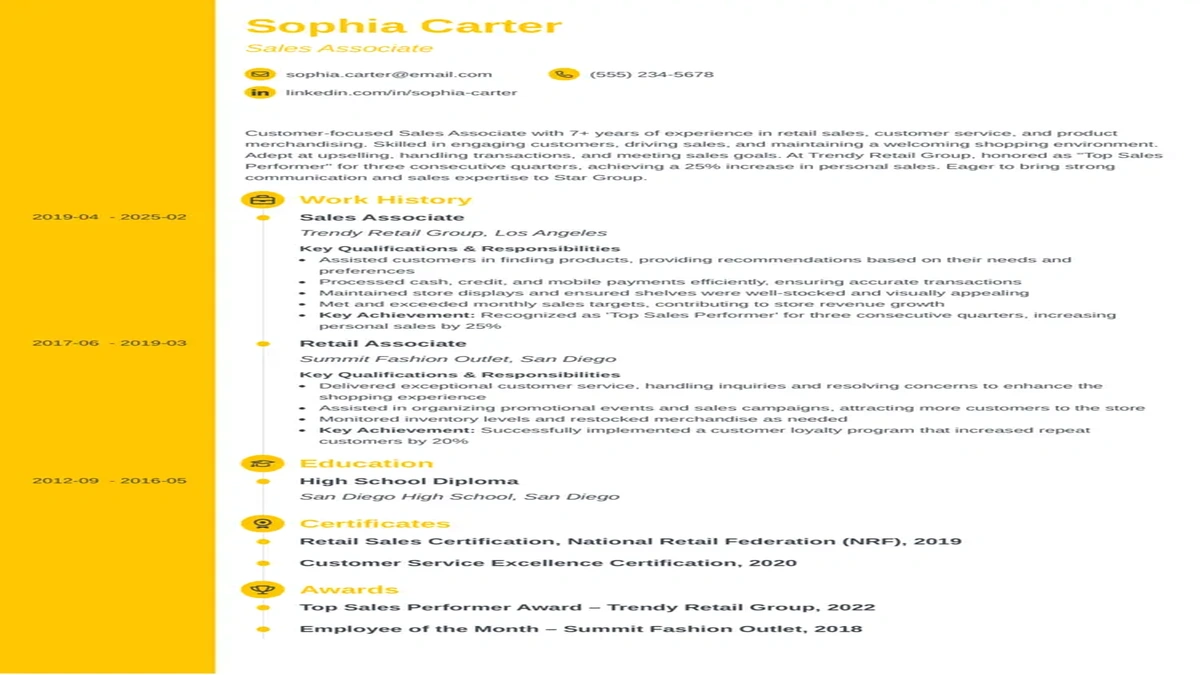
So, how do we make sure your resume survives both the bots and the human eye test? It starts with using a clean, modern resume format . Forget those highly stylized, multi-column templates with colorful progress bars showing your ‘90% mastery’ of Python. The bots hate them. They can’t read them.
To build an ATS-friendly resume , stick to a single-column layout. Use standard, professional fonts like Arial, Calibri, or Helvetica. Avoid putting critical information in headers, footers, or text boxes, as some software completely ignores these sections. If you’re looking for clean layouts, stick to classic, minimalist resume templates that prioritize text readability over fancy graphic design.
The real secret, however, lies in tailoring your resume for every single application. No, you don’t need to rewrite your entire history from scratch. But you must align your resume with the specific job description. Read through the posting and identify the core skills they are asking for. If they want ‘data analysis using SQL’ and you just wrote ‘SQL experience,’ update it to match their exact phrasing. These are your job description keywords , and they are the secret currency of modern recruiting.
According to research on recruitment platforms like Applicant Tracking Systems , matching keyword intent dramatically increases your match rate, pushing your resume to the top of the pile.
The Anatomy of a High-Converting Work Experience Section
Once you pass the initial bot screen, you have to convince the recruiter that you can actually deliver. This is where most resumes fall flat. A common mistake I see people make is writing their work experience section like a list of daily chores. They write things like: ‘Responsible for managing client accounts’ or ‘Handled social media posting.’
Let me rephrase that for clarity: nobody cares what you were responsible for; they care about what you actually accomplished . You need to shift from passive duties to active achievements. This is where we use strong action verbs and concrete numbers.
Instead of writing:
‘Responsible for managing a team and increasing sales.’
Write:
‘Led a cross-functional team of 5 to optimize digital outreach, driving a 34% increase in sales revenue over six months.’
See the difference? It shows scale, action, and results. I look at resumes all day, and honestly, fixing a bad resume is like tackling a complex personal wellness journey. Think of it like adjusting to a highly tailored PCOS diet where every minor ingredient must be precisely calculated to get results; similarly, every word and bullet point on your resume must serve a direct, measurable purpose.
How to Write a Professional Summary That Hooks Them
Located right at the top of your resume, your professional summary is your elevator pitch. It’s the hook. If this section is boring, the recruiter won’t bother scrolling down to read your impressive career history.
Avoid generic, cliché statements like: ‘Hardworking professional with a strong work ethic seeking a challenging role in a growth-oriented company.’ It tells the reader absolutely nothing. It is filler.
Instead, use this simple three-line formula:
- Line 1: Who you are and your years of experience (e.g., ‘Results-driven Software Engineer with 4+ years of experience building scalable web applications…’).
- Line 2: Your biggest, most relevant achievement or specializations (e.g., ‘Specialized in microservices architecture and cloud migration, successfully reducing latency by 40% for major e-commerce platforms…’).
- Line 3: What you are looking to bring to the target company (e.g., ‘Seeking to leverage deep expertise in cloud solutions to drive engineering efficiency at your firm.’).
By keeping this section punchy, you instantly answer the hiring manager’s most urgent question: What value can this person bring to my team today? This is how you strategically optimize your resume to stand out in a sea of identical applicants.
Stop Doing This | Common Resume Blunders That Kill Your Chances
Before we jump into the final steps, let’s run through a quick mental checklist of things you need to delete from your CV immediately. Especially in India, we tend to carry over some legacy habits from the classic ‘biodata’ era that are massive red flags for modern recruiters.
First, delete your physical address, your date of birth, your marital status, and your gender. Not only is this information completely irrelevant to your ability to do the job, but it can also lead to unconscious bias during the screening process. A city and state (e.g., ‘Mumbai, MH’) are more than enough.
Second, drop the ‘References available upon request’ line at the bottom. Recruiters already know this. It’s an outdated convention that takes up valuable real estate on your page. Keep your layout clean, structured, and focused purely on your key skills and professional wins.
Frequently Asked Questions
What if I have a gap in my employment history?
Don’t panic about a career gap . Be honest but brief. You can list the gap on your resume like a job entry, calling it ‘Career Sabbatical’ or ‘Full-Time Caregiving,’ and briefly state what you focused on (such as upskilling, personal projects, or family care). Recruiters value transparency over mystery.
Should I include a photo on my resume?
Unless you are applying for a modeling, acting, or specific public-facing role where visual presentation is an official requirement, do not include a photo. Most ATS software struggles with embedded images, and it can also introduce hiring bias.
How long should a professional resume be?
The golden rule is one page for every ten years of experience. If you have less than 7-8 years of experience, keep it strictly to a single page. If you are a seasoned industry veteran, a clean, high-impact two-page resume is perfectly acceptable.
Do I need a cover letter if it says ‘Optional’?
Yes. If you want to stand out, always write a short, tailored cover letter. It’s your chance to tell the story behind the data points on your resume and explain why you are uniquely passionate about the company’s mission.
The Golden Rule | It’s a Marketing Tool, Not an Autobiography
At the end of the day, your resume is not a historical archive of everything you’ve ever done since college. It is a marketing brochure designed to sell your future potential. When you sit down to edit it, look at every single line and ask yourself: ‘Does this point directly prove that I can solve the problems this company is facing?’ If the answer is no, cut it without mercy. Treat your resume like prime real estate, put your best achievements right at the top, and watch how quickly those silent rejection emails turn into interview invites.