
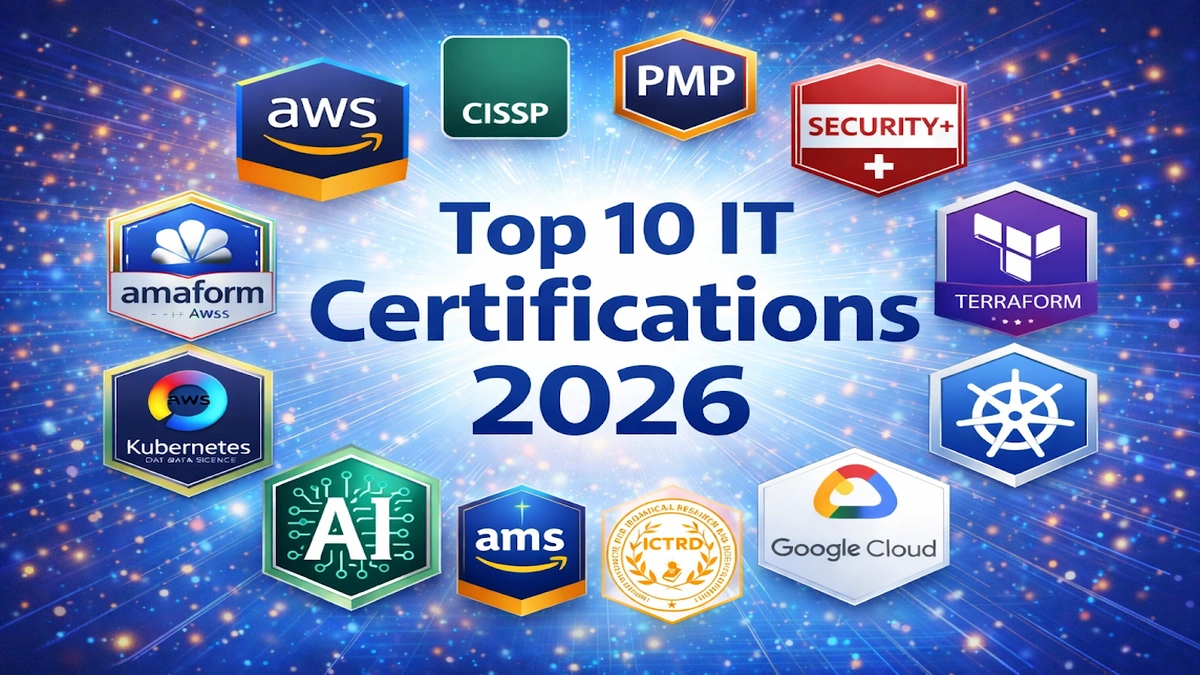
Let’s be honest for a second. If you’re reading this while sipping a cup of cutting chai or filter coffee, looking at your LinkedIn feed with a slight sense of dread, you are not alone. The job market in India right now feels like a game where the rules are being rewritten in real-time. What worked just a couple of years ago having a shiny engineering degree or a generic MBA just doesn’t carry the same weight anymore. Welcome to the era of hyper-specialization.
I’ve spent the last few months talking to hiring managers from Bengaluru to Gurugram, and the message is loud, clear, and slightly jarring: companies don’t care about where you went to college as much as they care about what you can solve on Day 1. In this climate, choosing the Best Certifications to Boost Your Career in 2026 is not just a resume-building exercise; it’s a survival strategy. Let’s look at the actual landscape, peel back the marketing hype, and find out what credentials genuinely matter to your career trajectory.
Why the Old Playbook is Dead (and What’s Replacing It)
For decades, the Indian career playbook was incredibly simple: get a degree, land a campus placement, and slowly climb the corporate ladder through tenure. But we are witnessing a massive global shift toward skills-first hiring trends across tech, finance, and management sectors. According to insights by theWorld Economic Forum, traditional educational pipelines simply cannot keep up with the breakneck speed of technological evolution.
In India, this gap is stark. Recruiters are bypassing traditional pedigree checks in favor of verified, specialized skills. If you possess the right industry-recognized credentials , you often skip the initial screening filters entirely. Why? Because a certification proves you have continuous learning agility a trait that is non-negotiable in the evolving future of work in India . It shows you didn’t stop learning when you got your degree.
The Tech Heavyweights | High-Paying Cloud & AI Certifications
If you are in the IT or tech-adjacent space, you already know that AI has gone from a cool demo to an absolute operational baseline. Simply knowing ‘how to code’ is no longer a differentiator; generative tools can do that in seconds. You need to know how to deploy, scale, and secure AI-driven systems. This is why upskilling for artificial intelligence is the most lucrative path you can take right now.
When looking at high-paying IT certifications , three main cloud-centric tracks dominate the board:
- AWS Certified AI Practitioner / Machine Learning Specialty: Amazon Web Services remains the infrastructure giant. This credential proves you know how to build and deploy ML models at scale.
- Microsoft Certified: Azure AI Engineer Associate: Essential if you are targeting large enterprise environments that rely heavily on Microsoft’s ecosystem.
- Google Cloud Professional Cloud Architect: Highly respected for its emphasis on robust, scalable architecture and data engineering.
But here is a word of caution: don’t just collect certificates like digital badges. Recruiters can spot a ‘paper-certified’ candidate from a mile away. You must pair your certification with actual GitHub repositories or real-world project portfolios that prove you can write the code, not just pass the exam.
The Balance of Career Health and Personal Stamina
Here’s a perspective shift I’ve realized over the years: building professional stamina is surprisingly similar to maintaining physical health. Think of career health like systemic wellness. Just as understanding how to control blood sugar naturally requires cutting out empty carbs and focusing on sustainable, long-term habits, professional growth requires cutting out outdated tasks and focusing on high-value skills.
Sometimes, the best way to accelerate is to temporarily pause, step away from the panic of job hunting, and recalibrate your skill set. It’s the professional equivalent of intermittent fasting giving your brain a break from the daily grind to focus deeply on intense, structured learning cycles that rejuvenate your employability index.
Managing the Chaos | Non-Tech & Leadership Credentials
What if you aren’t a coder? What if the thought of Python makes you break out in a cold sweat? Don’t worry. The demand for cross-functional leaders who can manage hybrid teams and complex tech integrations is at an all-time high. Technical teams need translators, coordinators, and leaders who can keep projects on track.
This is where the best project management certifications come into play. The PMP (Project Management Professional) remains a golden standard globally, but the focus has heavily shifted toward agile frameworks. Getting your PMI-ACP (Agile Certified Practitioner) or a Certified Scrum Product Owner (CSPO) designation shows you know how to ship products in volatile environments. These are premier career advancement courses that bridge the gap between technical teams and business stakeholders, making you indispensable to leadership.
How to Avoid the “Certificate Trap”
Let’s be completely honest: the certification industry is booming, and not all courses are created equal. A common mistake I see people make is spending lakhs of rupees on generic ‘Executive PG Diplomas’ that promise the world but deliver outdated PDF slide decks.
Before you invest your hard-earned money and valuable time in professional credentials for 2026 , ask yourself these three questions:
- Does this certification require a practical, proctored exam, or is it just a ‘watch-the-video’ course?
- Are local recruiters in India actually listing this credential in their job descriptions? (Do a quick search on LinkedIn to verify).
- Can you explain the practical applications of this course in an interview setting without relying on empty buzzwords?
Frequently Asked Questions
What are the best certifications for freshers in 2026?
For freshers, entry-level cloud certifications like AWS Cloud Practitioner or foundational data analytics credentials (like the Google Data Analytics Professional Certificate) are highly recommended. They establish baseline technical literacy without requiring years of industry experience.Are online courses from Coursera or Udemy worth it for a job search?
They are excellent for acquiring skills, but they rarely carry the same hiring weight as official, proctored certifications (like those from AWS, Microsoft, PMI, or Cisco). Use online courses to learn the material, but aim for industry-standard exams to validate that knowledge.How do I fund my certifications without breaking the bank?
Many companies have learning and development budgets that will fully reimburse you for passing exams. If you are self-funding, look for seasonal discounts, exam vouchers provided during free official virtual training days, or scholarship programs offered by platforms like Google and Microsoft.Will having multiple certifications guarantee a salary hike in India?
No certification guarantees a hike on its own. However, they give you the leverage to negotiate higher compensation by proving you possess hard-to-find skills that reduce onboarding time and operational risks for the employer.
How do I showcase my certifications on my resume effectively?
Don’t just list them at the bottom of your resume. Feature your most relevant certification next to your name or in your professional summary, and briefly mention a project where you applied those exact certified skills to achieve a tangible business result.